




Repatriation Advisory PanelTe Kāhui Tohutohu
Meet the respected Māori and Moriori representatives who advise our repatriation programme.
The Repatriation Advisory Panel is made up of respected Māori and Moriori representatives with expert knowledge in repatriation kaupapa, high level government policy, as well as leading initiatives celebrating and reclaiming indigenous customs, practices, arts, and languages. Panel members are also recognised leaders with mātauranga pertaining to funerary practices and reconnecting to ancestors that have been removed from their whānau and/or wāhi tapu and traded overseas.
The Chair of the panel is Professor Sir Pou Temara, who is joined by panel members Professor Sir Derek Lardelli, Haami Piripi, Aroha Mead, Hinerangi Himiona, Kiwa Hammond, Miria Pomare and Kura Moeahu. Together they advise our Karanga Aotearoa Repatriation Programme.
Importantly the panel has provided strategic guidance on key high-profile initiatives including the repatriation of Toi moko, kōiwi tangata, and kōimi tangata/kōimi tchakat from public institutions in England (2008, 2022), France (2011, 2012), Austria (2015, 2022) and the USA (2014, 2016), as well as setting tikanga Māoriand tikane Moriori protocols when reconnecting with Māori and Moriori ancestral remains housed in overseas institutions, safely guiding them home to Aotearoa, and ensuring they are offered respect and dignity in Te Papa’s wāhi tapu, before they are reunited with their uri.
Past members of the panel have included Professor Sir Hirini Moko Mead (Ngāti Awa), Edward Ellison (Ngāi Tahu), Alfred Preece (Moriori, Ngāti Mutunga), the late Dorothy Mihinui (Te Arawa), the late Professor Sir Hugh Kawharu (Ngāti Whātua, Ngāpuhi), the late Sir Paul Reeves (Te Ātiawa), the late Whaea Te Aue Davis (Waikato), the late Whaea Hokimoana Te Rika-Hekerangi (Ngāi Tūhoe), and the late Te Kanawa Pitiroi (Ngāti Tūwharetoa). In addition to these members the programme has also enjoyed the advice of Maui Solomon (Moriori, Ngāi Tāhu) on kaupapa of significance to Moriori, the support of the late Whaea Hemanawa (Hema) Olive Temara (Ngāi Tūhoe) who provided expert advice to Te Papa regarding tikanga on Te Papa’s national marae called Rongomaraeroa as well as supporting international repatriation work. In addition, Whaea Kataraina Pitiroi (Kahui Ariki o Ngāti Tūwharetoa) provided key advice and assisted her husband Te Kanawa Pitiroi while he was leading repatriation work for the Karanga Aotearoa Repatriation Programme.
Read more about panel members is below.
Contact us | Whakapā mai
To find out more about the Repatriation Advisory Panel, contact:
Dr. Te Herekiekie Herewini | Senior Advisor Karanga Aotearoa Repatriation Programme
Email | Īmera: Teherekiekie.herewini@tepapa.govt.nz
Sir William Te Rangiua Pou Temara KNZM
Chairman

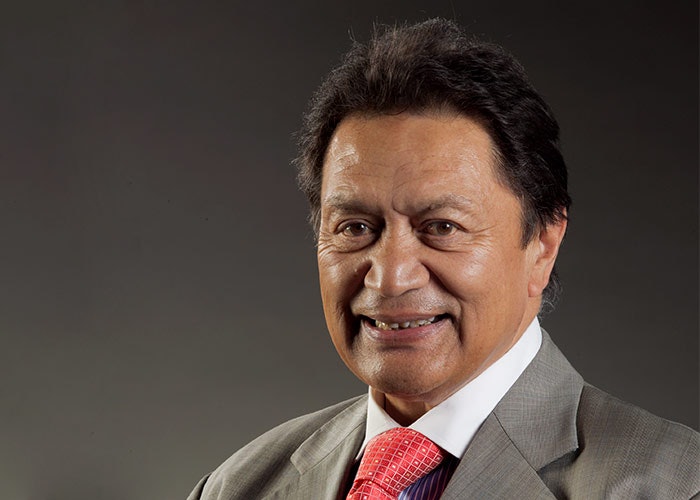
Professor Pou Temara
Professor Pou Temara is of Tūhoe descent.
Pou is an acknowledged authority on Māori language retention, history, and tikanga. A professor at the University of Waikato, he has written numerous publications and essays on Māori history and issues affecting Māori.
Pou was recently appointed to the Waitangi Tribunal. This tribunal is charged with making recommendations on claims against Crown breaches of the Treaty of Waitangi 1840.
Pou is also:
Director of Te Panekiretanga o te Reo (Institute of Excellence in the Māori Language)
a member of the Tūhoe Waikaremoana Māori Trust Board
Chairperson of Te Hui Ahurei a Tūhoe, an apolitical gathering of Tūhoe that meets twice a year to celebrate Tūhoe performing arts.
Haami Piripi
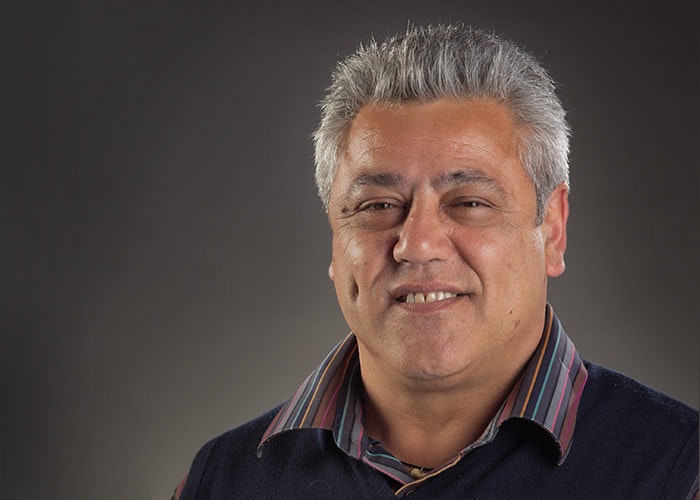
Haami Piripi
Haami Piripi is of Te Rārawa descent.
Haami is the Chairperson of his iwi authority, Te Rūnanga o Ngāti Rārawa. He is also former Chief Executive of Te Taura Whiri i te Reo Māori (the Māori Language Commission).
Haami is a passionate promoter of the Māori language and has had a lengthy career fostering Māori development in the public sector.
Sir Derek Arana Te Ahi Lardelli KNZM
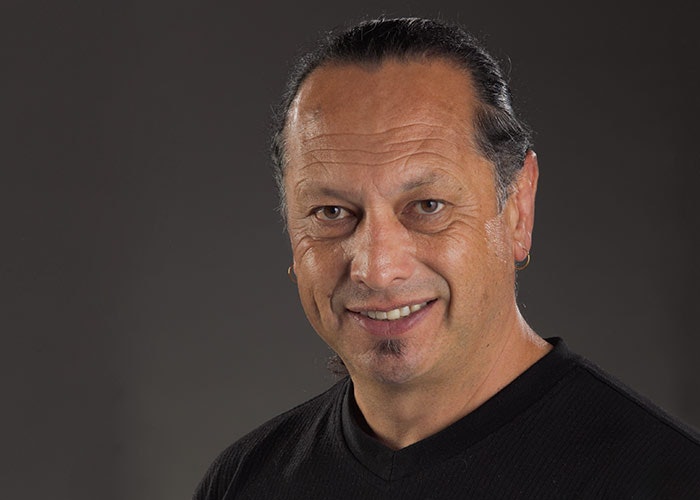
Derek Lardelli
Sir Derek Lardelli is of Ngāti Porou, Rongowhakaata, Ngāti Konohi (Ngāi Te Riwai), and Ngāti Kaipoho (Ngāi Te Aweawe) descent.
Sir Derek is an internationally recognised artist. He is renowned for promoting excellence in Māori arts, particularly the visual arts and kapa haka (cultural performing arts). Major projects have included design work for Air New Zealand and the New Zealand Olympic and Commonwealth Games teams, composition of the All Blacks haka ‘Kapa o Pango’, creation of the Māui sculptures on Mount Hikurangi, and commission works, including for the New Zealand Embassy in Cairo and international companies.
Sir Derek was awarded an Arts Foundation Laureate Award in 2004. In 2007, he coached and led East Coast group Whāngārā Mai Tawhiti to win the national kapa haka championships and gained a Master of Fine Arts (with Distinction) from Canterbury University. In 2008, Sir Derek was honoured as an Officer of the New Zealand Order of Merit (ONZM).
Derek is involved in numerous community, , national, and international events and is currently:
a lecturer at Toihoukura (School of Māori Visual Arts), Tairawhiti Polytechnic
Chairperson of Te Uhi, a tā moko arts collective
a trustee of Toi Māori Aotearoa (Māori Arts New Zealand).
Aroha Mead
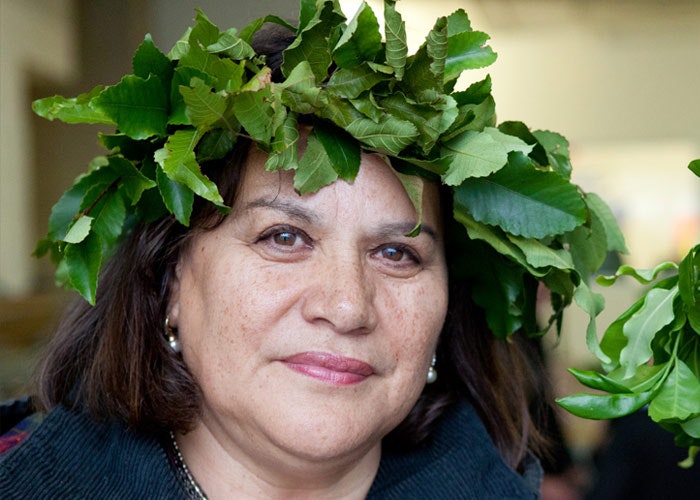
Aroha Mead
Aroha Te Pareake Mead is of Ngāti Porou, Ngāti Awa, Tūhoe, Tūhourangi, and Ngāti Tūwharetoa descent.
Aroha Te Pareake Mead is an independent Māori researcher specialising in mātauranga Māori, biocultural heritage, conservation, and Indigenous cultural and intellectual property (ICIP). With a career spanning more than 5 decades, she has contributed to Iwi and hapū, public policy, academia, journalism, international NGOs, and through her expertise, is widely recognised across Māori, Pacific, and global Indigenous networks.
Aroha currently sits on the Repatriation Advisory Panel at Te Papa Tongarewa, supporting the return of Māori ancestral remains to their iwi and hapū. She also serves as a hapū delegate on Te Rūnanga o Ngāti Awa, as Kāhui Kaumatua for Te Tira Whakamātaki, and as Pou Tikanga for the National Iwi Chairs Forum. She is a long‑standing advocate for Indigenous cultural and intellectual property rights, serving on the Māori Advisory Committees for both the Trademarks Act and the Plant Variety Rights Act, and contributing to the Toi Iho IP Committee protecting and promoting Māori art.
In conservation, Aroha is a member of the New Zealand Conservation Authority and contributes to Species Aotearoa, reflecting her commitment to safeguarding Aotearoa’s natural and cultural heritage.
Internationally, she has held major leadership roles within the International Union for the Conservation of Nature (IUCN), including 16 years on its Governing Council and two terms as global Chair of the Commission on Environmental, Economic and Social Policy, where she is now Chair Emeritus. She continues her global Indigenous advocacy through advisory roles with Conservation International and Nia Tero. Through these positions, she continues to support the advancement and protection of Indigenous Peoples and Local Communities, advocating for their cultural and intellectual property rights on a worldwide scale.
Kiwa Hammond


Kiwa Hammond
Kiwa Hammond is of Tohuk’ (Moriori)/Tohuao (Māori), Ngāti Kahungunu o Te Wairoa, Rongowhakaata, Ngāti Ruapani descent.
MA (Hons), DipM, Registered Translator/Interpreter – Toi Reo Māori (Māori Language Commission), Te Panekiretanga o Te Reo (Graduate)
Kiwa is an advisor and facilitator of Moriori language, versed in ceremonial customs and protocols, and has undertaken repatriation work from overseas and domestically of tīpuna Māori and karāpuna Moriori. Kiwa has extensive whakapapa (ancestral connection) and association with numerous iwi (tribal groups) and kaupapa (indigenous initiatives and organisations) throughout Aotearoa New Zealand and Te Moana Nui a Kiwa (Pacific).
He is an award-winning storyteller and has authored over 50 published works over the past 25 years. Kiwa was the lead translator for Te Ture mō Te Reo Māori - Māori Language Act 2016, the first legislation to be fully enacted in Māori and English.
He is the Chair of Te Wairoa Reorua - Bilingual Wairoa 2040, the Chair of Te Pae Motuhake mō Te Tai Tonga, and sits on the national board of Te Mātāwai for the collective iwi/imi of Te Tai Tonga (Te Waipounamu and Rēkohu-Chatham Islands-Wharekauri).
His whānau have been intimately involved in this important repatriation work over several decades and he considers it an honour to carry on that work.
Hinerangi Himiona
Hinerangi is of Ngāpuhi-nui-tonu and Ngati Toa Rangatira descent.
She resides in Te Tai Tokerau (Northland, New Zealand) in her ancestral region of Taiāmai between the Hokianga Harbour in the west and Pewhairangi (Bay of Islands) in the east. She is a descendant of many signatories to He Whakapūtanga and Te Tiriti o Waitangi.
Hinerangi is a highly skilled relationships, event, and project manager, researcher, and facilitator. She is a professional archivist and continues to study and practice Māori lore and philosophy. Her wide-ranging networks span thirty years of experience working with people in their communities, senior executives within iwi, and central and local government. Hinerangi shares her time equally between iwi, hapū, and marae activities at home with her marae, hapū, and iwi as well as activities, projects, and events of national significance such as the development and delivery of the He Tohu exhibition 2014-2017, project managing the inaugural Putake o te Riri commemorations 2019, the development of the Tandanya Declaration 2018, and the co-design of the national documentary heritage campus (Archives New Zealand and National Library) with mana whenua iwi in Pipitea, Wellington (2020-2025).