





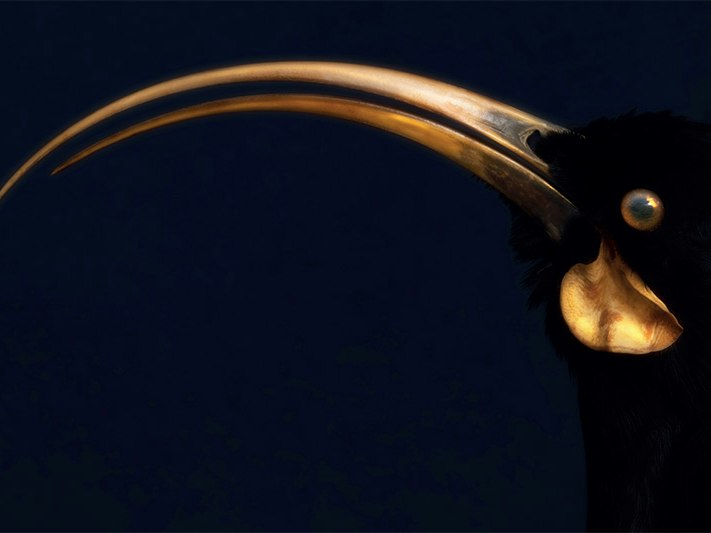
Meet the manu in Taharaki Skyside
Learn more about the native manu behind Fiona Pardington’s Taharaki Skyside. Each is unique, culturally and environmentally important, and many need our protection.
Free museum entry for New Zealanders and people living in New Zealand
Open every day 10am-6pm
(except Christmas Day)
Free museum entry for New Zealanders and people living in New Zealand
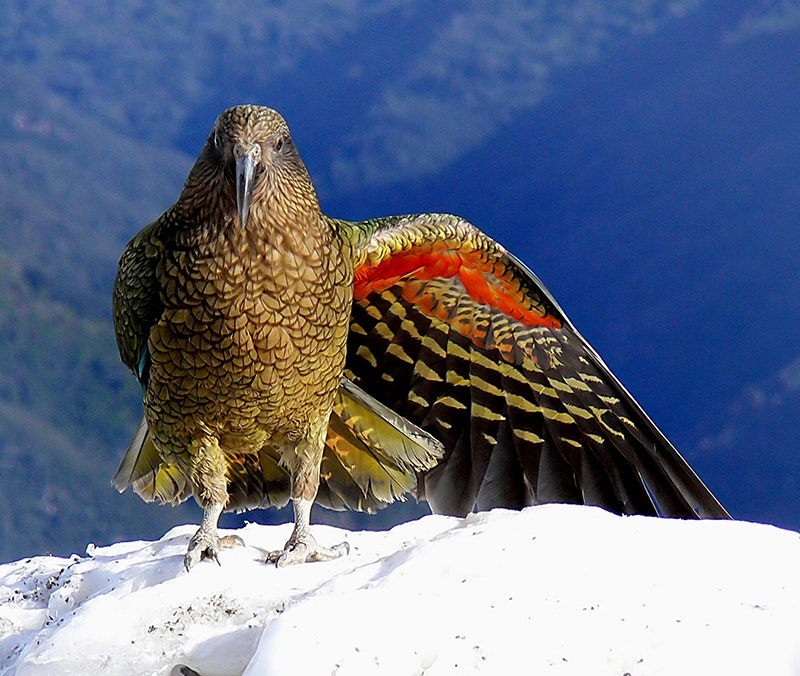
Kea. Photo by Bernard Spragg. NZ from Christchurch, New Zealand, CC0, via Wikimedia Commons
Kea call (Source: Department of Conservation CC BY 4.0)
High-altitude forests, mountains, and sub-alpine scrubland and fields in the Southern Alps
Become a kea surveyor! If you are a regular backcountry user, then start recording the presence and absence of kea on your trips. (DOC)
Threatened – Nationally Endangered
Vulnerable to predation from introduced mammals, interaction with humans and human equipment, environmental lead poisoning
Kea are the world’s only alpine parrot and are incredibly curious, making them a fixture at mountain huts and ski lodges where they are known to play with – and sometimes destroy – what they find there!
Kea are considered to be highly intelligent, even among parrots, and very playful. They are exceptional problem-solvers, solving complex puzzles put to them by animal researchers.
Ko te reoreo a kea ki uta, ko te whakataki mai a toroa ki tai, he kotuku ki te raki, he kakapo ki te whenua
The voice of the kea is heard inland, the cry of the albatross is heard at sea, a kotuku in the sky, a kakapo on the ground.
This whakataukī is about everything having its rightful place, acknowledging the kea’s rightful place in the rugged mountain wilderness
He kea ki pae maunga, he keorangi ki pae atamai
The mountain parrot sits atop the mountain and at the pinnacle of intelligence.
This whakataukī celebrates the famous wit, boldness, and intellect of the kea/ keorangi, reaching the highest levels of wisdom and understanding:
Learn more about the native manu behind Fiona Pardington’s Taharaki Skyside. Each is unique, culturally and environmentally important, and many need our protection.
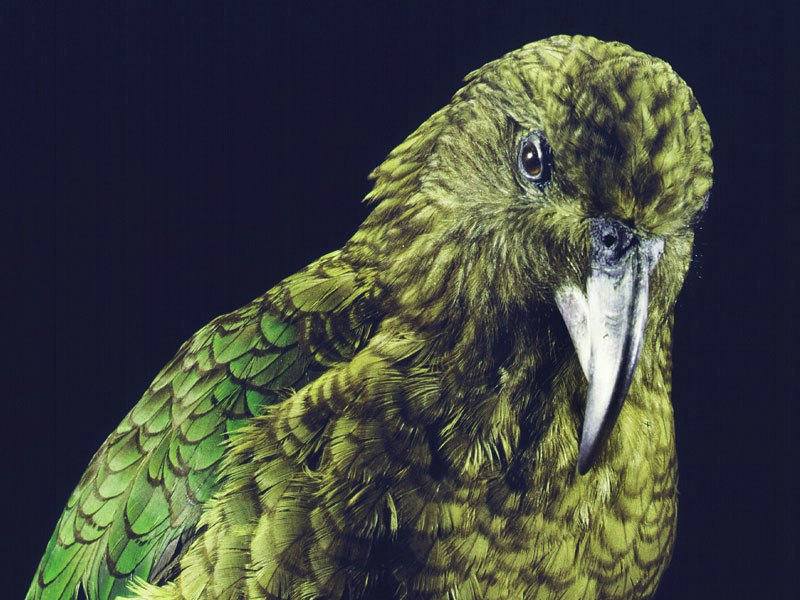
The kea is an extraordinary parrot that makes its home in snow-clad mountains. It has olive green feathers, scarlet under its wings, and weighs about a kilogram and is renown for being mischievous with hiking gear and windscreen wipers. Jewellery, badges and stamps along with other taonga can be found on Collections Online.
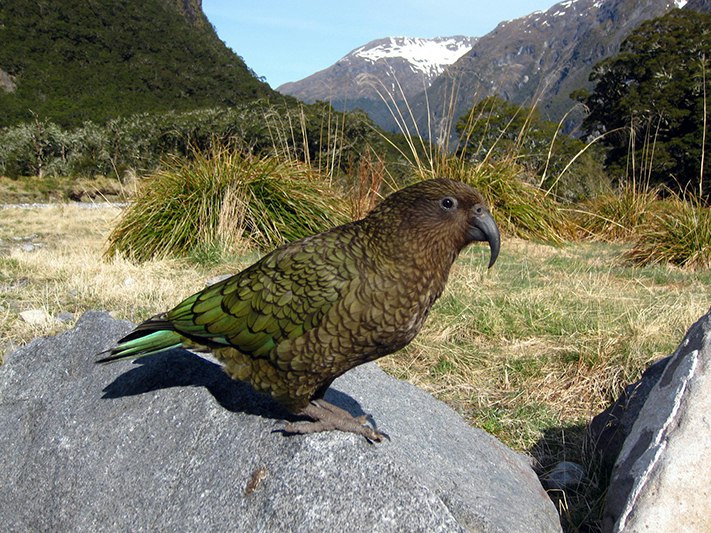
Estimating kea population size is difficult due to their extensive range, rugged terrain, low kea density, cryptic behaviour of adults and flocking behaviour of juveniles. They are monogamous, with long-term pair-bonds. Reports of polygamy were not upheld by radio tracking studies. Juvenile kea congregate in loose, wandering flocks.
This link will take you to NZ Birds Online website.