




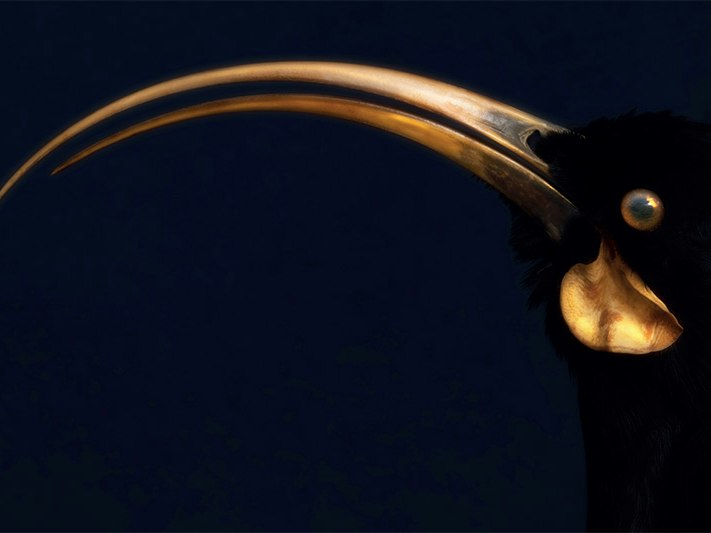
Meet the manu in Taharaki Skyside
Learn more about the native manu behind Fiona Pardington’s Taharaki Skyside. Each is unique, culturally and environmentally important, and many need our protection.
Free museum entry for New Zealanders and people living in New Zealand
Open every day 10am-6pm
(except Christmas Day)
Free museum entry for New Zealanders and people living in New Zealand
Takahē, Kāpiti Island, 2024. Photo by Jane Harris CC BY 4.0
Takahē song (Source: Department of Conservation CC BY 4.0)
In high-altitude tussock and grasslands. They shelter in nearby forests, and also like wetland edges.
North Island takahē | Moho are Extinct.
South Island takahē are Threatened – Nationally Vulnerable to introduced predators, habitat loss, and food competition.
The South Island takahē was believed to be extinct (like its North Island cousin) in 1898. The last wild population was discovered in 1948 in remote mountains near Lake Te Anau, Fiordland. This sparked Aotearoa New Zealand’s first and longest running endangered species programme. Species though extinct but rediscovered, like the takahe, are referred to as ‘zombie species’ or ‘lazarus species’.
Takahē eat a lot of fibre. So much that they can poop up to 9 metres a day.
The takahē is a rail (like weka and pūkeko), and is recognised as the largest living rail in the world.
The name takahē has its roots in the te reo Māori word takahi – to stamp or trample – describes the strong legs of the takahē used to navigate its bushy environment.
North Island takahē were known as solitary birds – hence their other name, moho (hermit).
Learn more about the native manu behind Fiona Pardington’s Taharaki Skyside. Each is unique, culturally and environmentally important, and many need our protection.
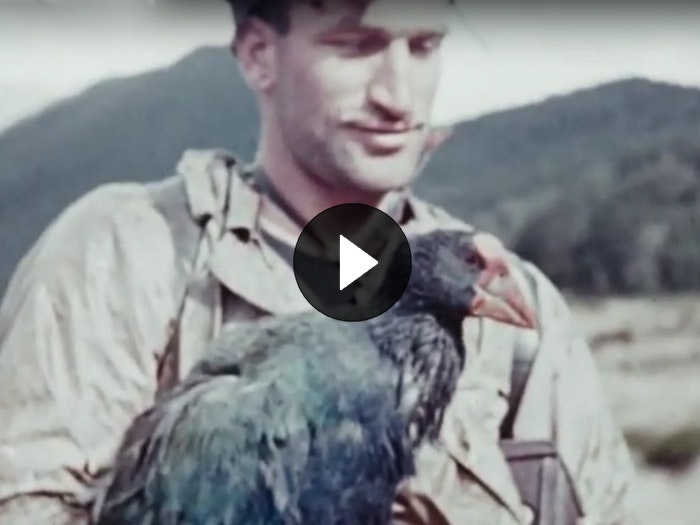
We've resurfaced colour footage not seen since the 1940s. One of New Zealand's greatest wildlife stories – the rediscovery of the 'extinct' takahē in 1948, found alive in Fiordland.
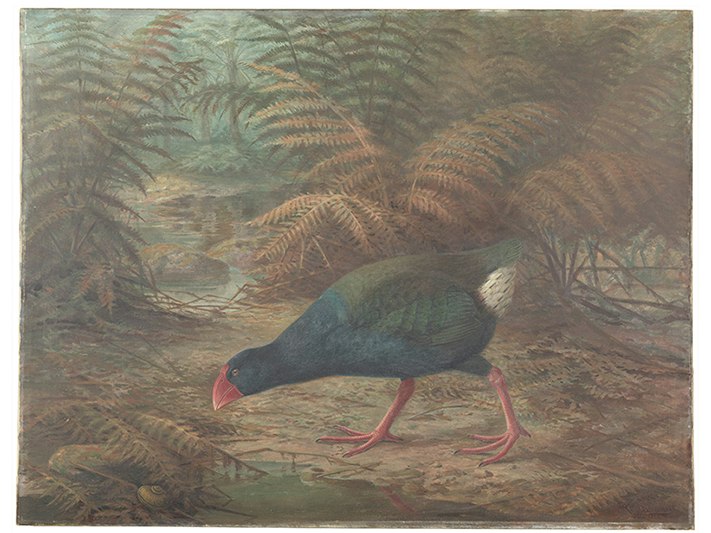
Learn about both the North Island and South Island takahē from its eggs, through to specimen collections, and bones, including a famous 1851 skin originally sent to Britain and later returned to Aotearoa New Zealand. Alongside the birds, you’ll also find watercolours, historic photographs, slides, and sketches documenting both before and after the dramatic rediscovery of the South Island takahē in 1948.