Watch: Phylesha Brown-Acton MNZM talks about the trope of the dusky maidens
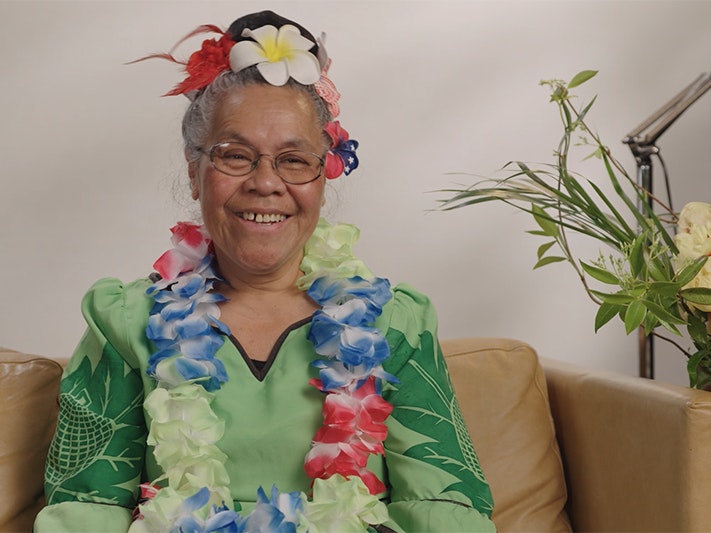
Watch Phylesha Brown-Acton talk about how adornment influences her life as a Niuean woman, and the Western trope of Pasifika women being perceived and portrayed as anonymous exotic dusky maidens.
“I think about how [the women] standing before the camera, how they would have wanted to have adorned themselves if they had the opportunity. And that those decisions were made for them. They were stylised by predominantly Western white men, who staged those images to appease the fascination of the Western world.” – Phylesha Brown-Acton
Watch Phylesha Brown-Acton
Please note: Select Tongan for Niuean subtitles on this YouTube video
Transcript
Expand All
Collapse All
Niuean
Māori
English
Meet Phylesha
Phylesha Brown-Acton, MNZM hails from the village of Fineone Hakupu Atua, Niue Island. She identifies as Fakafifine. Phylesha has rooted her work in advancing the voice, visibility, and rights of MVPFAFF+ / Pacific LGBTQI+ people and their families for over 25 years.
Phylesha is a weaver, dancer, storyteller, and life navigator.
Phylesha today remains just as committed alongside many others who continue their collective activism, work, and solidarity across many platforms to advance the human rights of those she serves. Phylesha coined the mnemonic MVPFAFF+ / Māhū – Hawaiʻi, Vakasalewalewa – Fiji, Palopa – Papua New Guinea, Fa’afafine / Fa’atama – American Sāmoa & Sāmoa, Akava’ine – Cook Islands, Fakafifine – Niue, Fakaleiti or Leiti – Tonga, which recognises terms that are far more expansive in understanding of gender and sexuality through knowledge systems that see and recognise people beyond the restraints and nuances of Western ideologies of gender binary and sexuality concepts.
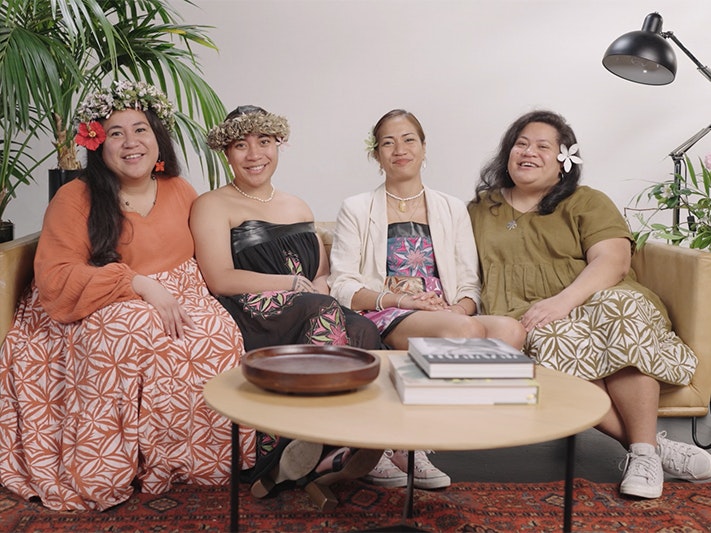
Watch the four Filo-Masoe sisters talk about how adornment influences their lives as Sāmoan women, and the Western trope of Pasifika women being perceived and portrayed as anonymous exotic dusky maidens.
Watch Mata Atonio talk about how adornment influences her life as a Sāmoan woman, and finding out the names of some of the women photographed in Sāmoa who remain unnamed.
Watch five interviews with eight Pasifika women examining the trope of the sensual ‘dusky maiden’ and the cultural significance of flowers in the Te Moananui-a-Kiwa Pacific Islands. Explore further through blog articles responding to the films, Te Papa collection images, and Pacific writing and media.