




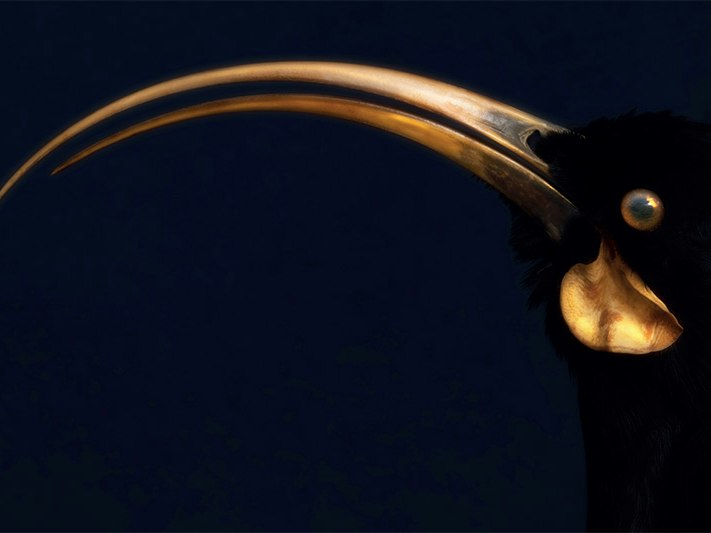
Meet the manu in Taharaki Skyside
Learn more about the native manu behind Fiona Pardington’s Taharaki Skyside. Each is unique, culturally and environmentally important, and many need our protection.
Free museum entry for New Zealanders and people living in New Zealand
Open every day 10am-6pm
(except Christmas Day)
Free museum entry for New Zealanders and people living in New Zealand
North Island kōkako, 2005. Photo by Douglas Mak. CC BY 2.0 via Flickr
North Island kōkako call (Source: Department of Conservation CC BY 4.0)
North Island kōkako populations are mainly forests in the northern half of the Te Ika a Māui.
North Island kōkako: Threatened – Nationally Increasing
South Island kōkako: Threatened – Nationally Critical (likely extinct)
Vulnerable to introduced predators, food reduction.
The South Island kōkako has not been seen since 2007, and is likely extinct. If any remain, they are in extremely low numbers.
Kōkako have a slow haunting back-and-forth song, once called ‘rare forest music’ by 19th century ornithologist Walter Buller. They sing to defend their territory, and male and female kōkako sing the longest known songbird duet anywhere in the world.
Though flighted, kōkako wings are small and they mostly get around by jumping and hopping through the forest with their strong legs, earning them the nickname “squirrel birds”.
Kōkako uru i te wehi
A wattlebird entering fearlessly
This whakataukī is a tongue-in-cheek jab, originally referring to a man joining another tribe's war party. The shy kōkako would never do such a thing, so this whakataukī refers to someone being somewhere they don’t belong, or have no business in.
Kōkako are well known for their beautiful song. In one pūrākau, Māui asked the different birds for water. The kōkako agreed, and filled its ears with water. Māui rewarded the bird by stretching its legs so it could move with swift hops. The ‘water’ can be seen in the kōkako’s blue wattles.
Learn more about the native manu behind Fiona Pardington’s Taharaki Skyside. Each is unique, culturally and environmentally important, and many need our protection.
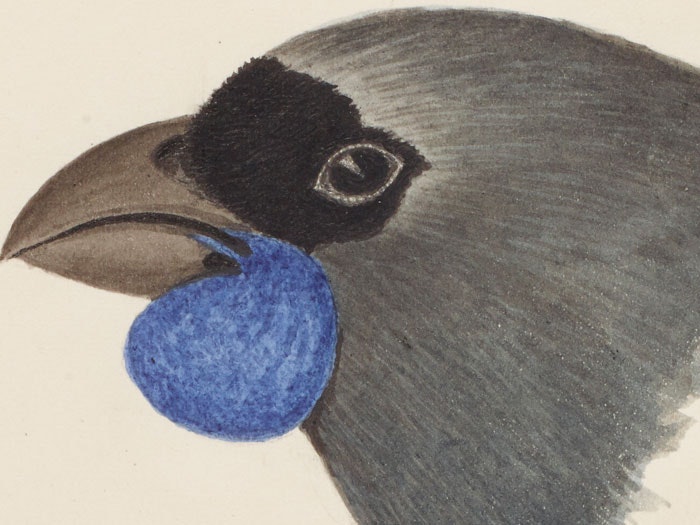
Find collected birds, including the likely extinct South Island kōkako with its orange wattles, along with eggs, paintings, and stamps on Collections Online.