


The Urban Activity Book: 99 Ideas for Nature Activities in Urban Spaces around Aotearoa New Zealand
An engaging activity book for young New Zealanders and their families.
Free museum entry for New Zealanders and people living in New Zealand
Open every day 10am-6pm
(except Christmas Day)
Free museum entry for New Zealanders and people living in New Zealand
Nina Tonga, Rachel Yates and Sean Mallon, co-authors of Tapa, discuss their work with Te Papa Press.
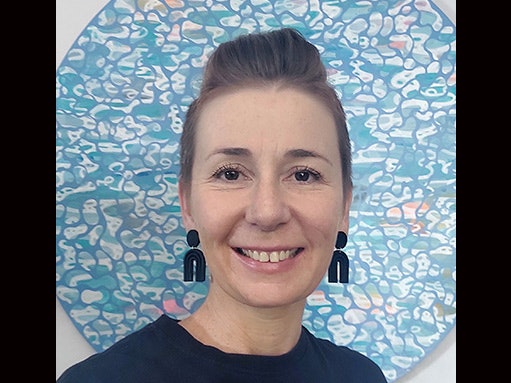
Rachel Haydon is a qualified primary school teacher and scientist with a zoology Bachelor’s degree and a Master’s in marine science. She has more than twenty years’ experience of teaching science to children of all ages in schools, museums, zoos and aquariums around the world. She was the General Manager of the National Aquarium of New Zealand and is now CEO of Orana Wildlife Park, Christchurch. Rachel is the author of The Nature Activity Book and The Beach Activity Book (Te Papa Press) and Kaewa the Kororā (Massey University Press). She is dedicated to motivating children of all ages to get outside and explore, connect with nature and have the best chance to protect the natural world and all that lives within it.
Nina Tonga: It has definitely felt like making tapa, a very long one! Tapa-making and book-making are collective efforts that require many skilled hands working together with a shared creative purpose. We have been working on this book with Te Papa Press since 2021 and it is a project that has required many collaborators who have all helped to bring this book together.
Rachel Yates: I am a terrible tapa maker – but I do appreciate the patience and collective energy that goes into creating something meaningful. Tapa-making and book-making require both.
Sean Mallon: It has been a joy to work with Te Papa Press to bring many voices together and honour the work of many hands across generations and cultures.
NT: For me it is reflected in the polyvocality of the book and our efforts to highlight the voices of diverse makers
of tapa as well as makers from diverse fields who produce knowledge and shape perspectives of tapa.
RY: For me, mana taonga asks us to put the taonga first. That meant making space for the many voices and relationships connected to the cloth and letting that guide the storytelling in this book. That approach felt empowering and a real privilege.
SM: The book has created space for a range of responses, from the factual and descriptive to the personal and poetic. People have laid claim to the many tapa in this book. They have written from academic disciplinary points of view but also as makers and people who live with tapa cloth every day.
NT: We are very lucky to have worked together before and built strong working relationships that have seen us through several projects as well as our PhDs. Having co-editors who know you and your work well has been one of the major advantages of this collaboration. We have leant on each other to get tasks done and especially for support when we were in the trenches of writing.
RY: One of the real advantages of this project was being able to draw on such a wide range of knowledge and experience. My co-editors and the larger publishing team helped me find a lane and voice that felt right for my contribution, while also encouraging me to think beyond it. We brought different perspectives to the work, but the process was constructive and respectful, making for richer conversations and ultimately a stronger book.
SM: I like to think that we share some familiarity with each other’s work and share some intellectual whakapapa through the teachers we have studied and worked with. However while we are on a similar wavelength so to speak, we are each tuned in a little bit differently, which has served the collaboration well.
NT: It was quite a difficult task and we spent a lot of time refining our selection right up to the final stages. Although we had a limited selection, I tried to signal the breadth of the collection and include contemporary artworks, clothing and objects that utilise tapa in some way.
RY: The selection process involved many many hours of looking closely at the collection in virtual sessions and in-person meet-ups around tables covered in printouts to test different combinations and approaches. We had to balance things like visual impact, provenance and style, while doing our best to be attentive to representation. It’s important to note that our choices were shaped not only by the cloths themselves, but also by the histories of collecting that brought them into Te Papa’s care.
SM: In considering these limited selections I looked for the aesthetically or visually interesting pieces with significant provenance. Of course, not every tapa met these criteria … but it was a starting point.
Fa’apito Lesātele during her siapo demonstration, October 2025. Photograph by Rachel Yates.
NT: I have too many favourites! To approach this slightly differently, there are examples that I feel close to because I was able to witness their making in some way. For example, I hold fond memories of filming Lolohea Tupouniua and the ‘Oto‘ota Fahina society finishing their Ngatu Fuatanga, 2014 in Auckland and washing stencils for Dame Robin White and Tamari Cabeikanacea in Lautoka, Fiji where they made That Vase, 2019. Both occasions were rare opportunities to learn from these amazing women and to see how tapa making is folded into their homes and lives.
RY: I too find it difficult to choose one tapa. What stayed with me were the stories within the cloth and the traces of the people behind them. Collecting a siapo from Fa‘apito Lesātele, which she made from start to finish, was particularly special. I also appreciate the scale of launima, and there is one made by Tongan youth in Aotearoa where the marks of learning and ‘mistakes’ remained visible in the finished work.
Overall, I was continually surprised by the variety of styles, colours and meanings represented across the book.
SM: I gravitated to tapa with asymmetries, where all the decorative elements aren’t perfect and the design choices seem unusual. I like the pieces with little personal touches, names rendered in scrawly handwriting or reverse lettering, the crooked lines and the unfinished or the abruptly changing patterns or sequences of motifs.
SM: In 2025, I saw this map in an exhibition at the Museum of Prehistory in Taitung, Taiwan. It acknowledges Taiwan as one of the starting points in the story of how the paper mulberry plant dispersed into the wider Pacific region. It is a perspective I’ve not seen before, and one that visually represents a broad chronology of the plant’s history, so we approached the curator Lekal FC Lin, (who is also a contributor to this book) for permission to use it.
Map of the Pacific acknowledging Taiwan as one of the starting points in the story of how the paper mulberry plant dispersed into the wider Pacific region.
NT: While I have loved archive diving and tracing published records of artists and tapa makers, this book has reinforced for me that so many tapa histories are not documented in this way. Many tapa histories are living histories held in memory and practice by makers, families and communities who often keep their own archives. Being able to connect and capture some of this in the book has been one of my highlights and a good reminder that there are so many tapa stories left to tell.
RY: I guess one of the things that was reinforced for me was just how adaptable tapa has always been. There are many lives of tapa. Through this book I encountered it in historical rituals and ceremonial practices, but also in contemporary fashion, jewellery and community design. The creativity of the makers and communities who continue to re(k)new these traditions was one of the things I most enjoyed learning about.
SM: This book project has been a reminder of how our art forms in the Pacific have complex histories of continuity and change. There are histories of cultural loss and stories of creativity, innovation and revival. The project of writing about art in the Pacific as history is an ongoing one.
SM: This work was made possible by the creativity and hard work of Te Papa imaging team, collection managers and conservators. While these large ngatu appear on foldouts in the book, they are also accessible on Te Papa’s Collections Online. For me, these outputs demonstrate how the development of books can serve many outcomes and activate an investment in the care and documentation of collections in the museum.
NT: The ngatu tā’uli (blackened tapa) is from the collection and was made by Stone Maka, a contemporary artist of Tongan heritage based in Christchurch who features in the book. When we asked Stone for permission to use his work, he provided a moving response describing the wrapping as ‘an ocean to explore – the jacket of your ancestors’, which echoes the way tapa is used across the Pacific to wrap the most valuable and treasured items.
Ngatu Tā’uli (black tapa), Kulimoe’anga Stone Maka, 2010. Purchased 2015. Te Papa (FE012937)
NT: I hope they will see tapa as much more than a textile and find inspiration from the many artists, tapa practitioners and collectives featured in the book. I also hope that the book inspires our readers to know more about the tapa they may have in their homes or in their workplaces.
RY: I hope Pacific readers see something of themselves in this book – this one’s for the culture! Whether people see reflections of their own experience or are discovering tapa for the first time, I hope this book helps convey why this cloth continues to matter so much to so many communities.
SM: I hope they will take away a deeper appreciation of how tapa is and has long been a carrier of our histories and a mediator of many relationships within and beyond the museum.
An engaging activity book for young New Zealanders and their families.
Books for inspiring wonder and curiosity in our tamariki (children).