Free museum entry for New Zealanders and people living in New Zealand

ExhibitionsOpening Fri 25 Sep

Tatau TatauTe Ropu Wahine Maori Toko i te Ora | Maori Women’s Welfare League

Tēnei rā Te Ropu Wahine Maori Toko i te Ora te whakanui i ēnei 75 tau o te taunaki i te wahine Māori, mō te iwi katoa te painga. Tūhuratia ngā mahi – tatau tatau, piki mai, kake mai!

***

The Maori Women’s Welfare League is celebrating 75 years of supporting wāhine Māori. Discover their extraordinary mahi – tātau tātau, everyone’s welcome!

When | Āhea

Fri 25 Sep – Jan 2027

Where | Ki hea

Mana Whenua, Level 4

Cost | Te utu
Ages | Te reanga

All ages

Allow | Me whakarite

25 minutes

Accessibility | E wātea ana ki

Seating available

This small display of taonga explores the stories behind some of the league’s many achievements – from setting up Aotearoa Māori Netball to improving housing and education for whānau.

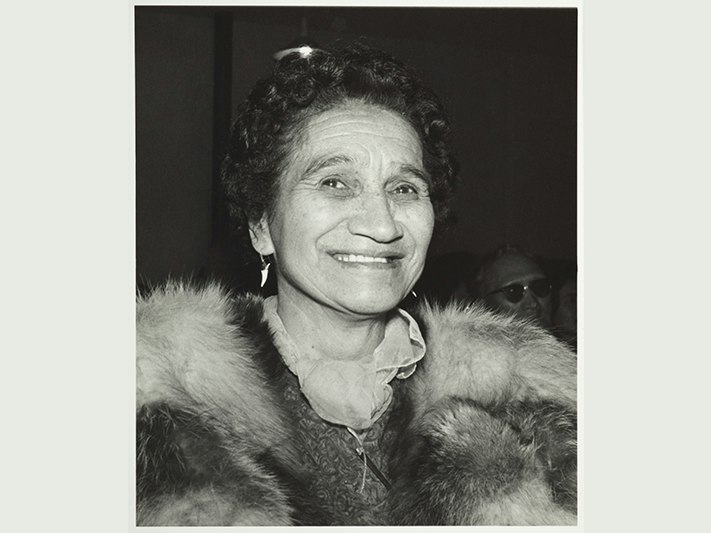
See Dame Aroha Reriti-Crofts’ kākahu and Dame Whina Cooper’s fox stole – strong leaders who had real style. A kitchen table displays a teacup belonging to Princess Te Puea, the league’s patron. There’s even a copy of the league’s beloved recipe book from 1982 – pāua with pineapple sauce, anyone?

Watch videos capturing the league’s groundbreaking achievements and find out how young wāhine are shaping its future.

The seed I would like to plant in your heart is a vision of Aotearoa where all our people can live together in harmony and share the wisdom from each other.

– Dame Whina Cooper

The league’s first conference, Wellington, September 1951. Back row: Lucy Jacob, Maura Tamihana, Miraka Petricevich (later Szászy), Michael Rotohiko Jones, Puhi Royal, Rangitaamo Takarangi, Naki Swainson. Front row: Kuini Te Tau, Frances Paki, Whina Cooper, Mairatea Tahiwi, Rumatiki Wright. Photograph albums recording conferences and other League events. Ref: 1/2-173500-F. Alexander Turnbull Library, Wellington, New Zealand. /records/44819017

President Whina Cooper at the first Maori Women’s Welfare League conference, Pipitea Marae, Wellington, 1951. Photo by Barry Woods, National Publicity Studios. Ref: 1/2-040058-F. Alexander Turnbull Library, Wellington, New Zealand. /records/23229136

View of some of the delegates at the Maori Women’s Welfare League Conference in the Wellington Town Hall. Tourist and Publicity. Ref: 1/2-040544-F. Alexander Turnbull Library, Wellington, New Zealand. /records/23021707

Mrs T Love demonstrates raranga to (top row) Mrs McGill, Mrs Te Waari, Mrs Keepa, and (front row) Mrs Prestidge at the 1953 Maori Women’s Welfare League conference, Wellington. Photo by T Ransfield. Tourist and Publicity. Ref: 1/2-040546-F. Alexander Turnbull Library, Wellington, New Zealand. /records/23247934

Tea-ware set, ‘Maori Art’, belonging to Princess Te Puea Hērangi CBE, about 1906. Made by Royal Doulton Ltd, England. Represents the Maori Women’s Welfare League – Tainui rohe. Purchased 2002 (ME024113)

  • Two women are sitting side by side weaving flax, while three other women look on.

    Maori Women’s Welfare League Opening Weekend

    Join us in celebrating the 75th anniversary of the Maori Women’s Welfare League and the opening of the display Tatau Tatau: Te Ropu Wahine Maori Toko i te Ora | Maori Women’s Welfare League. Discover the extraordinary history and work of the League through a weekend of kōrero, waiata, and raranga.

    Fri 25 Sep 2026, 1.00pm – 3.00pm

    Sat 26 Sep 2026, 10.15am – 3.45pm

    Sun 27 Sep 2026, 10.15am – 12.45pm

    Event Ngā kaupapa motuhake

  • =""

    Maori Women’s Welfare League

    Founded in 1951, Te Ropu Wahine Maori Toko i te Ora (Maori Women’s Welfare League Inc.) is the only national charitable Maori Womens Organisation in Aotearoa. Since the League was founded, it remains principally concerned with the wellbeing of Maori women and their whānau.

    This link will take you to the Maori Women’s Welfare League website.

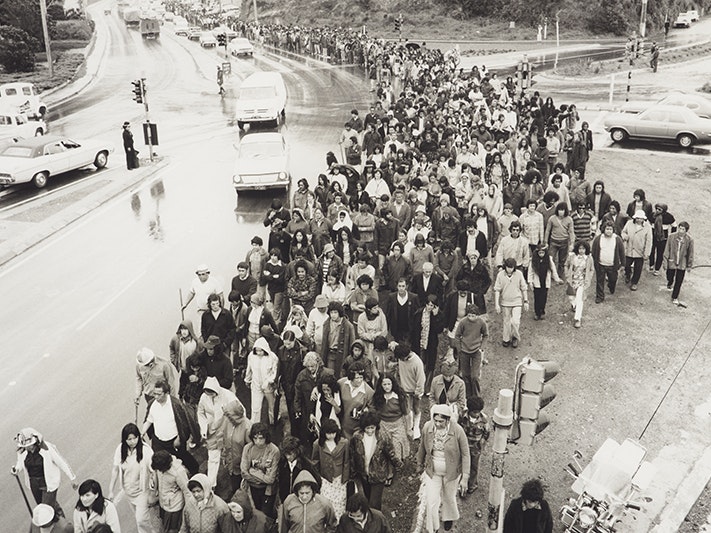
  • A black and white photo of a lot of people marching along a wet road. There are cars alongside them.

    Māori Land March, 1975

    The 1975 Māori Land March expressed deep unrest over ongoing loss of Māori land. Led by 79-year-old Dame Whina Cooper, the protest march began in the far north town of Te Hāpua on 14 September 1975 with about 50 marchers and gained 60,000 signatures, and an estimated 5,000 marchers by the time it was presented it to Prime Minister Bill Rowling on the steps of Parliament in Wellington a month later on 13 October 1975.

Get our newsletter

Stay in the loop about our wide range of events and exhibitions.

REGISTER

Follow us

Follow our social media channels for a glimpse behind the scenes at Te Papa.

Join Friends of Te Papa

Friends enjoy benefits and discounts including invitations to previews and private viewings.

JOIN

Donate

Find out how you can support Te Papa through a donation or bequest by becoming a patron.

DONATE